


Film Review: Infernal Affairs (9/10)
Hollywood remakes often rely on bloated runtimes and excessive violence, this original feature keeps its narrative razor-sharp and emotionally bruising.
In the underworld, loyalty is just a bad investment waiting to be cashed out in lead. Andrew Lau and Alan Mak’s Infernal Affairs (2002) strips away all Hollywood moralizing and dives headfirst into the rotting core of institutional corruption. Long before Martin Scorsese adapted the premise for The Departed, this Hong Kong masterwork set the absolute gold standard for modern crime paranoia. It is a cynical, hard-boiled descent into a world where honor is a myth and survival requires wearing a permanent mask.
Furthermore, the film's structural brilliance lies in how it frames the entire police force and the Triads as two sides of the same filthy coin. It remains a rare artistic achievement where high-concept procedural tension meets deep philosophical fatalism. Viewers are forced into a claustrophobic universe where the line between law enforcement and organized crime has completely dissolved. Ultimately, this opening segment establishes an atmosphere of cold, inescapable dread that permeates every single frame.

STORY (1.5/2)
The premise is a masterclass in structural tension: Chan Wing-wai is a veteran police officer who has spent a grueling decade deep undercover inside the Triads, while Lau Kin-ming is a smooth-talking Triad mole who successfully infiltrated the police academy and climbed through the ranks. Both men are drowning in their respective lies, desperate to find the mole within their opposing ranks before their own identities completely fracture. The script constructs an escalating game of cat-and-mouse that operates on pure psychological dread rather than cheap action set pieces.
Every single narrative beat drips with the suffocating realization that the enemy is sitting right across the desk during routine briefings. Rather than relying on standard procedural tropes, the plot drives forward on the sheer mental exhaustion of maintaining a double life for years on end. Both agents recognize the mounting danger, yet neither can escape because the systems they serve demand total psychological annihilation. This thematic inevitability elevates a standard cop thriller into a genuine tragedy of modern urban alienation.
The pacing moves with a deliberate, surgical rhythm that allows the undercover surveillance to build maximum suspense. Instead of rushing through exposition, the directors give their characters room to sweat, plot, and doubt their own allegiances in quiet corners. This patient structuring ensures that when systemic betrayal finally strikes, it carries maximum narrative impact. It is a masterclass in how to build quiet, simmering tension across a crime runtime without losing focus.

VISUALS (1.5/2)
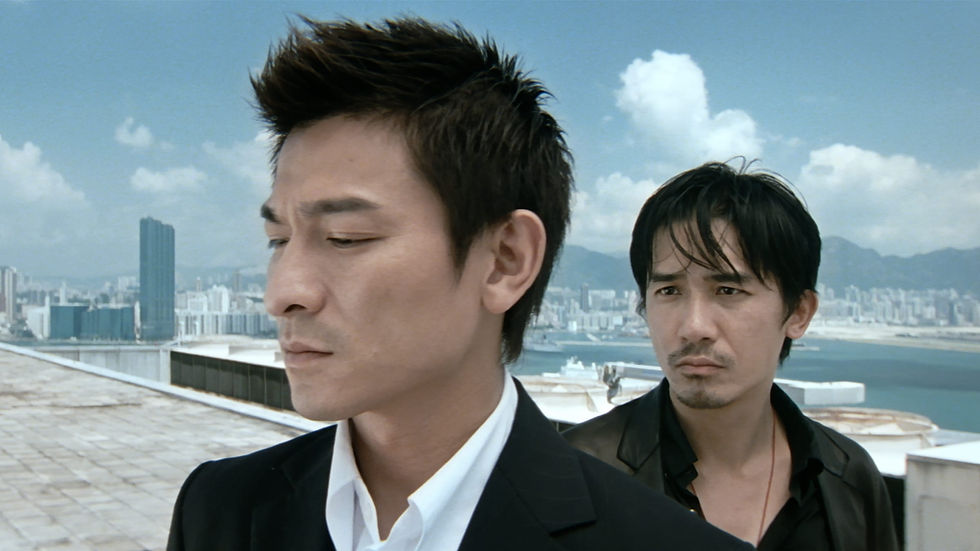
Directors Andrew Lau and Alan Mak shoot Hong Kong as a sprawling, neon-soaked concrete labyrinth that feels perpetually soaked in rain and moral decay. The recurring visual motif of mirrors, glass reflections, and elevator doors perfectly underscores the fractured dual identities of the protagonists. Every single frame is composed with architectural precision and uncompromising stylistic discipline, reinforcing the central theme that truth is an illusion. When the camera pulls back to capture these towering skyline views, viewers are left with a lingering sense of cold urban entrapment.
This visual dichotomy between sterile police headquarters and shadowy night clubs reinforces the protagonist's shared descent into spiritual bankruptcy. The harsh lighting choices purposefully strip away any glamour from the criminal trade, presenting it as an exhausting trap rather than an exciting adventure. Even quiet dialogue scenes are framed through physical barriers like glass windows and office partitions to suggest permanent emotional distance. It stands as a stunning display of visual storytelling that speaks volumes through framing alone.
The framing choices consistently emphasize enclosure and paranoia through tight angles and heavy interior shadows. Characters are frequently trapped between heavy doorframes and flickering fluorescent lights, visually underscoring their lack of genuine freedom. This recurring visual motif reinforces the central thesis that everyone in this city is ultimately trapped by their own choices. It is a masterclass in neo-noir visual design.
SOUND (1.5/2)
Chan Kwong-wing’s score pulses with a tense, atmospheric electronic beat that ratchets up the anxiety during surveillance scenes, contrasting sharply with moments of chilling silence. The sound design uses ambient city noise—screeching car tires, radio static, and neon hums—to create an environment where danger could drop from the ceiling at any second. Every single auditory cue is meticulously placed to heighten the psychological tension without ever feeling manipulative.
The audio landscape also excels brilliantly in quiet, contemplative moments that allow the undercover negotiations to breathe properly. Consider the sharp click of elevator buttons, the rustle of confidential case files, and the heavy thud of office doors closing shut. This sonic discipline ensures that the audience feels every ounce of professional stress alongside the characters on screen. It is an immersive auditory achievement that complements the naturalistic visual style at every turn.
Director Andrew Lau's rigorous attention to acoustic detail pays off dividends during the explosive confrontation sequences. Every weapon and communication device possesses a distinct acoustic signature that communicates urgency immediately. The absence of traditional orchestral swelling allows the electronic music and environmental sounds to dominate the auditory spectrum. It remains one of the most immersive sonic environments in the history of crime cinema.
CHARACTER (2/2)
Tony Leung gives a masterclass in internalized exhaustion as Chan, allowing the heavy toll of a decade of violence and isolation to show clearly in his tired eyes. You can see he is a man standing on the edge of a cliff, praying for a way back to normalcy before his mind completely breaks. Andy Lau matches him with a chillingly composed performance as the corporate mole who desperately wants to wash his hands clean of the Triads and become a legitimate officer. The chemistry between them is electric, anchoring the high-concept premise in raw human desperation.
Each character is meticulously defined by their professional competence and psychological limits, making their brief moments of clarity feel earned and their tragic downfalls absolute. Chan’s strict personal code serves as both his survival armor and his ultimate emotional prison. Lau’s corporate ruthlessness mirrors the unforgiving nature of the criminal ecosystem they inhabit. Through these powerhouse performances, the film transforms a routine undercover drama into a profound study of human duplicity.
Even the secondary players leave an indelible mark on the gritty landscape of the film. Anthony Wong brings a quiet, weathered loyalty to his role as the police superintendent who acts as Chan's only lifeline to humanity. Eric Tsang adds terrifying charm to his role as the Triad boss who treats his subordinates like disposable assets. Every single actor on screen understands the grounded, gritty tone required to make these double agents feel entirely real.

FACTOR X (2/2)
What separates Infernal Affairs from standard crime flicks is its profound Buddhist-inspired philosophical weight—the title itself referencing the Avici hell, the lowest realm of suffering where torment is continuous and unending. It completely redefined how contemporary cinema handles undercover morality by exposing the spiritual cost of living a lie. It is a film that understands the crushing loneliness of trying to reclaim your soul from organizations that own your entire life. The realization that institutional debt can never truly be repaid gives the narrative a haunting, lingering aftertaste.
This unique combination of procedural accuracy, electronic atmosphere, and stellar performances has turned the film into an eternal touchstone for modern crime storytelling. It proves that genre movies can possess the thematic weight and artistic rigor of classic tragedy. Modern neo-noir cinema owes an immense debt of gratitude to the uncompromising vision displayed here. Ultimately, its enduring cultural footprint cements its status as a peerless masterwork.
Infernal Affairs is a sleek, razor-sharp crime thriller that puts most Hollywood gangster epics to shame with its sheer efficiency and thematic depth. If you only know the American remake, you owe it to yourself to see where the legend truly began. Lock the doors, check your wire, and prepare to be hypnotized by this definitive underworld tragedy. You will not find a more complete cinematic achievement in the entire modern crime genre.
FINAL SCORE: 8.5/10
Where to Watch: HBO Max

Help Us Keep The Lights On By Supporting Our Partners:

*This post contains affiliate links, and we may receive a commission if you make a purchase.


Comments