


The Unsung Heroes of Hollywood: Grips, Gaffers, and Greatness
- Damien Johnson
- Nov 22, 2025
- 3 min read
When audiences talk about movies, they talk about stars. Directors. Sometimes writers. Maybe a cinematographer if the film is striking enough to trend. But for every frame of cinema that feels effortless — every breath of atmosphere, every controlled beam of light, every move of the camera that feels like it glides on air — there’s a crew member behind it whose name rarely leaves the walls of a production set.
These are the people who make the magic work: the grips, gaffers, riggers, electricians, operators, and craft specialists who translate a director’s vision into something an audience can actually see. They are the backbone of Hollywood, and yet their contributions remain, at best, quietly appreciated and, at worst, invisible.
It’s time to give them the recognition they deserve.

Grips: The Architects of Movement
If cinematographers paint with light, grips build the scaffolding that makes the canvas possible.
Grips handle the physical support systems of a shoot: camera rigs, dollies, cranes, tracks, rigs for complex stunts, and the structural components that allow cinematographers to sculpt environments. When your favorite action sequence glides seamlessly through chaos? A dolly grip — a specialist within the department — is guiding every inch of that camera’s movement like a conductor steering an orchestra.
Because of them:
A chase scene can become a ballet of precision.
A handheld moment can be stabilized into emotional clarity.
A sweeping crane shot can be executed in a space no crane was ever designed to fit.
The grip department is the living proof that controlled physical engineering is as much an art form as filmmaking itself.

Gaffers: The Scientists of Light and Shadow
Ask any cinematographer and they’ll tell you a secret:A great gaffer is invaluable — sometimes irreplaceable.
The gaffer (or Chief Lighting Technician) is responsible for translating the DP’s vision into lighting reality, building the emotional blueprint of a scene through illumination. Modern gaffers must master everything from LED ecosystems to color temperature theory to complex DMX programming.

They collaborate on:
Mood
Atmosphere
Color contrast and exposure
Texture
Continuity of light across locations and time
If a film feels warm, cold, tense, hopeful, ethereal, or oppressive — that’s not an accident. It is the result of strategic lighting decisions orchestrated by a gaffer who understands both aesthetics and physical physics. In an industry transitioning between traditional lighting and advanced LED technologies, the role of the gaffer has only grown more essential and more technical.
Great cinematography doesn’t exist without great gaffing. Period.
Electricians & Riggers: The Foundation of Safety
Film sets are controlled chaos — and electricity is the one element you cannot afford to treat casually. Set electricians and riggers keep productions safe, powered, and prepared for sudden changes.

Their work often goes unnoticed because when electricians are doing their jobs well, nothing goes wrong. Every light ignites on cue. Every rig holds its weight. Every stunt setup is secured. Every power cycle runs clean and stable. And when sudden thunderclouds roll in, they’re the first ones solving problems before anyone else is aware there were problems.
They protect the crew. They protect the actors. They protect the production’s ability to keep going.
The Collaborative Symphony
Departments don’t work in isolated bubbles. A seamless shot is often the result of:
The grip team designing a custom rig
The electric team ensuring safe power distribution
The lighting team creating mood
The camera team executing the movement
The AD team keeping all this on schedule
Filmmaking isn’t hierarchical — it’s architectural. Every role supports the weight of the others. Without these craftspeople, film would collapse in on itself.
A Changing Industry — and a Future Dependent on Craft
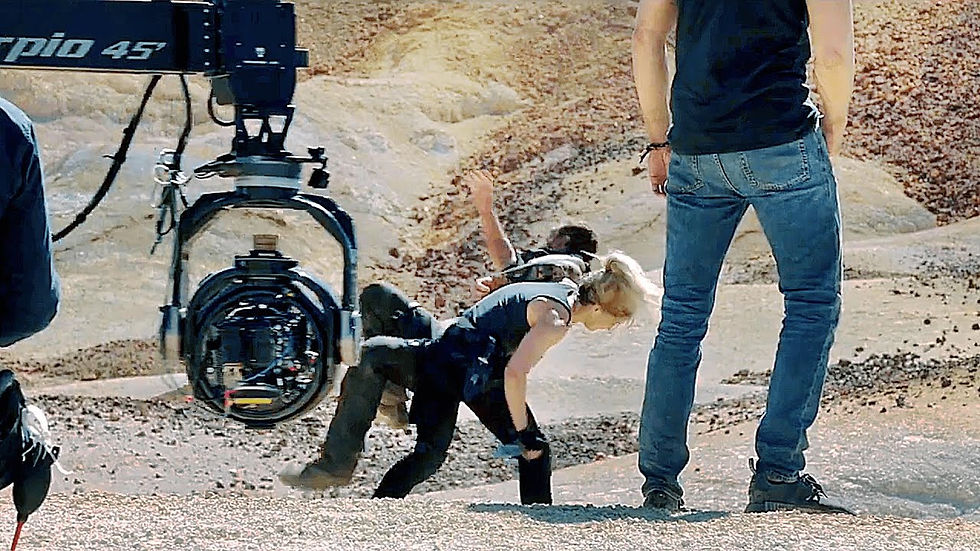
As productions grow in scale and visual ambition, the demands on crew have increased. LED stages, virtual production, robotics, and AI-assisted workflows require not fewer people — but more skilled specialists.
The future of filmmaking will still rely on the expertise of:
lighting technicians who understand how to blend physical and virtual lights
grips who can integrate real-world rigging with digital environments
electricians who can adapt to increasingly complex power ecosystems
Technology doesn’t erase craft — it expands it. And Hollywood’s future depends on the people who understand both the old tools and the new ones.
For every actor delivering a monologue, there’s a grip silently operating a slider.For every gorgeous frame, there’s a gaffer crafting the glow.For every masterpiece, there’s a crew of people whose names scroll by far too quickly for the credit they deserve.
Filmmaking is a collaboration — not a spotlight. And greatness is rarely made by one person.
It’s built.
Rigged.
Lit.
Powered.
Crafted.
By the unsung heroes of Hollywood.


Comments