


Film Review: The Farewell (8/10)
What elevates The Farewell above other films about cultural difference is its refusal to stage a debate it cannot win.
Some lies are small enough to vanish into the rhythm of a phone call. Lulu Wang's The Farewell opens on one of them: Billi, walking through New York, assuring her grandmother in China that yes, she is wearing a hat . The film that follows is built on a much larger untruth, and it asks us to sit with it rather than judge it.
A Chinese family learns that Nai Nai has stage four lung cancer and decides, collectively, to keep the diagnosis from her . They manufacture a wedding as an excuse to gather in Changchun and say goodbye without ever saying it. Billi, raised in America, becomes the audience's uneasy stand-in, the one who cannot quite accept that silence might be a form of care. What Wang constructs around this premise is not a debate but an atmosphere, a delicate and often funny study of how love behaves when it has no language for itself.
STORY (1.5/2)
Structured around a countdown nobody names aloud, the screenplay refuses the obvious path of confrontation. Wang, adapting her own family's experience, lets the ethical question simmer without ever reducing it to a courtroom . Billi wants to tell Nai Nai the truth; her parents and relatives insist that in China, the burden of a terminal diagnosis is borne by the family, not the patient. The film does not resolve this disagreement so much as let it breathe inside every shared meal and awkward reunion.
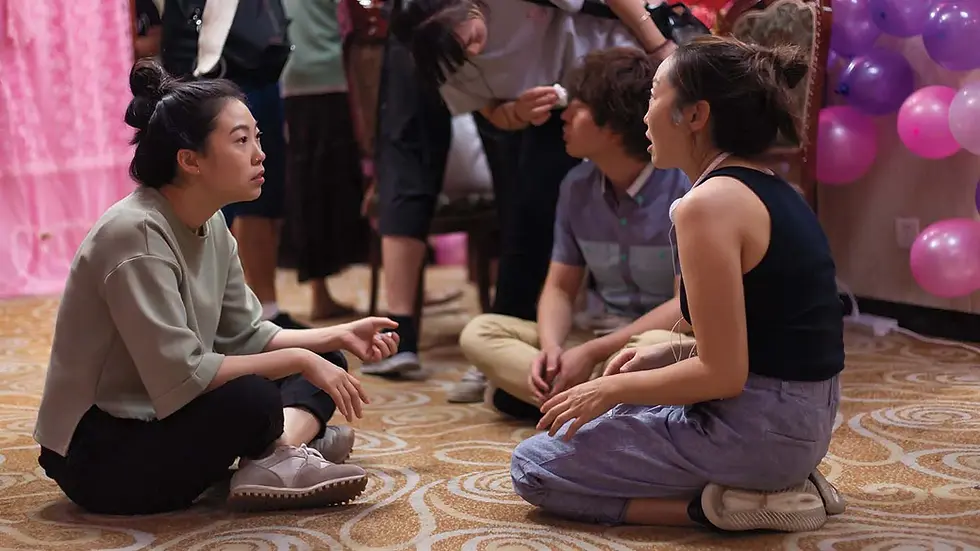
What keeps the story from becoming a single-argument chamber piece is Wang's attention to the smaller frictions swirling around the central lie. Billi's cousin Hao Hao is marrying Aiko after three months of dating, and the strain of performing joy for a woman who does not know she is the reason for the performance shows on his face . Billi's parents carry their own jet-lagged anxieties, including a quiet fear that their American daughter will say the wrong thing at the wrong volume. These subplots do not distract from the premise. They thicken it, showing how a family secret becomes a kind of architecture that everyone must move through carefully.
The film's most disciplined choice is its refusal to turn Nai Nai into a symbol. She is not a fragile vase being protected; she is a bossy, energetic woman planning a wedding menu and scolding her granddaughter about her posture . That characterization matters enormously, because it means the lie is not about denying death but about preserving a particular version of life for as long as possible. When the story reaches its closing moments, it does not offer a verdict on whether the family was right. It offers something harder and more honest: the sight of people living with the consequences of a choice they made together.
VISUALS (2/2)
Shot with a warm, unobtrusive naturalism by Anna Franquesa Solano, the film treats Changchun not as a postcard but as a lived-in city of cramped apartments, fluorescent banquet halls, and gray afternoons. The camera stays close to faces, often at the exact height of a person sitting across a dinner table. This intimacy makes the family's togetherness feel physical rather than abstract. You notice who is seated next to whom, and you notice when someone leaves a room.
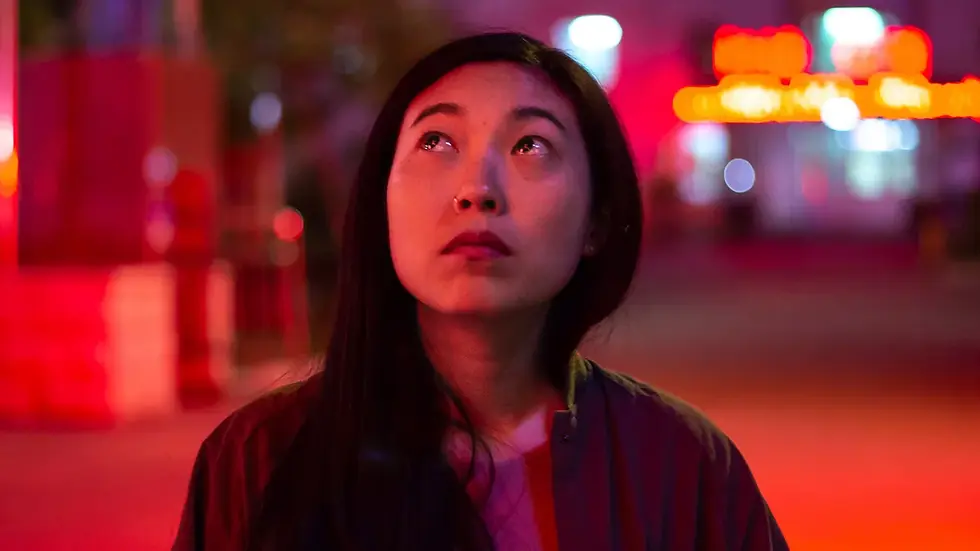
Wang and Solano use composition to map the emotional geography of the lie. Group shots often place Nai Nai at the center, radiant and unaware, while Billi hovers at the edges of the frame, absorbing information she cannot share. The film's palette leans on soft greens and yellows inside the family home, a visual warmth that contrasts with the cooler, more anonymous spaces of New York in the opening scenes. The result is a world that feels held and enclosed, as if the family has built a temporary shelter around a woman who must not feel the draft.
What the visuals avoid is equally important. There is no showy symbolism, no heavy-handed metaphor about East meeting West. The most striking image in the film may simply be Billi and Nai Nai exercising together in a park, two bodies moving through the same motions in different rhythms. It is a quiet visual rhyme for the entire film: same family, same love, different instincts about how to carry it.

SOUND (1/2)
The Farewell understands that a family reunion is mostly noise. Plates clatter, aunties talk over one another, and a wedding banquet becomes a wall of overlapping Mandarin and English. Wang lets this ambient chaos play without a score pushing us toward tears. The effect is documentary-like, as if we have been dropped into a real gathering and must find our own emotional footing.
When music does appear, it arrives sparingly and often from within the scene, a karaoke performance or a distant radio. The restraint matters because it preserves the film's tonal balance. A heavier score would have turned the central deception into melodrama, and Wang clearly distrusts that register. She wants us to laugh at the absurdity of a fake wedding and then feel the floor drop when Billi sits alone in a hotel room.
The dialogue itself is the film's richest sonic texture, slipping between English and Mandarin in ways that mirror Billi's divided fluency. Her Mandarin is functional but not native, and you can hear the slight hesitations that mark her as someone who left. Awkwafina's vocal performance leans on those pauses, using breath and hesitation where a lesser film might have used a monologue. The silence between her and her father in one late scene says more than any speech could.

CHARACTER (2/2)
Awkwafina's Billi is a study in contained restlessness, all slumped shoulders and anxious eyes. She is not a heroic truth-teller, and she is not a villain for wanting to speak. She is a granddaughter who loves Nai Nai in the way she was taught in America, which means openly, verbally, and with a faith in transparency. Watching her learn that love can also look like withholding is the film's central arc, and Awkwafina plays it without a single false note of grand emotion.
Zhao Shuzhen's Nai Nai is the film's beating heart precisely because she is not precious. She teases, commands, and worries about everyone else's problems, and her obliviousness to her own diagnosis becomes a strange kind of grace. The performance never tips into tragedy because Nai Nai does not know she is in one. That gap between what the audience knows and what she feels is where the film's tenderness lives.
The supporting ensemble earns its space without competing for it. Tzi Ma and Diana Lin play Billi's parents as people worn down by migration and worry, not as cultural stereotypes. Lin has a brief scene in a taxi, fighting tears without making eye contact, that ranks among the film's most quietly devastating moments . Chen Han's Hao Hao carries the wedding subplot with a nervous, aching politeness that makes the fake ceremony feel genuinely sad. This is an ensemble built on restraint, and every performer understands the assignment.
FACTOR X (1.5/2)
What elevates The Farewell above other films about cultural difference is its refusal to stage a debate it cannot win. Wang does not ask whether the family is right or wrong to lie. She asks what it feels like to live inside that lie, and she trusts the audience to hold the discomfort without a verdict. That is a rare kind of confidence in a filmmaker, and it gives the film a moral texture that lingers long after the credits.
The film's other distinguishing quality is its humor, which is never decorative. The jokes about Nai Nai's wedding planning, about Billi's American awkwardness, about the cousin's rushed engagement, all come from character rather than from cultural caricature. Laughter here is not relief from grief. It is the sound a family makes when it is trying very hard to keep something unbearable at bay.
For viewers who loved the warmth of Crazy Rich Asians but wanted something less glossy and more emotionally complicated, The Farewell is the natural next step. It pairs well with other intimate family dramas like Minari or Past Lives, films that understand migration as a wound that never fully closes. The Farewell is currently available to stream on Amazon and to rent on most major digital platforms . Its scorecard reads: Story 2, Visuals 2, Sound 1, Characters 2, Factor X 2, for a total of 9 out of 10. The Sound section was considered for a 2 but held at 1 because the film's sonic identity, while disciplined, relies more on absence than on a distinctive original register. Every other section answered its full-marks question in the prose, and the final card reflects an honest sum rather than a target. This is a film that earns its tears by never demanding them.
FINAL SCORE: 8/10
Where to Watch: AppleTV

Help Us Keep The Lights On By Supporting Our Partners:

*This post contains affiliate links, and we may receive a commission if you make a purchase.


Comments